

The rules of the supposed “new” ‘side hustle tax’
From 1 January 2024, online selling platforms, such as Depop, Vinted, eBay, Uber, and Deliveroo were subject to new rules on information sharing. This has colloquially been deemed the ‘side hustle tax’.
HM Revenue & Customs (HMRC) now require these platforms to share additional information on their sellers: primarily the number of sales/services that have been undertaken; and the total income that has been generated from the ‘side hustle’.
HMRC say these changes are targeted at detecting and dealing with tax evasion and ensuring that businesses are treated similarly for all tax purposes. The UK tax system is based on self-assessments. This means that, previously, HMRC relied upon individuals declaring any extra income they make themselves. It is evident HMRC are attempting to ensure all individuals are paying the right amount of tax on their earnings.
It should be noted that the actual thresholds to pay tax on trading income and the dates the tax is due have not changed. All that has changed is the information being shared with HMRC by these platforms to help detect tax evasion.
Trading vs merely selling old goods
To put your mind at ease, most individuals will not be affected by the rules. HMRC do not (and have not previously) looked to tax people trying to sell old items that are no longer needed, but rather those actively trading to make additional income. It boils down to the intention behind the original purchase.
While trading is a loose term, HMRC have a set of rules that they follow (known as ‘badges of trade’) that help determine whether an individual is trading or not.
It should be noted these ‘badges’ should be considered in the round. HMRC would take an holistic approach when determining if a trade is being carried on.
Thresholds
In short, if you make around £1,700 (€2,000 of income), or complete 30 sales/services over a full tax year (6 April to 5 April) these online platforms will now automatically share this information with HMRC.
This information has always been gathered by HMRC upon request, however, now they will be able to view this automatically.
Individuals are entitled to a tax-free allowance against their property and trading income of £1,000 (subject to certain conditions). You have to pay tax if your gross trading income exceeds £1,000; however, you will only pay tax on the excess above £1,000. It is important to note that this £1,000 income is before any platform fees are taken off, so the income will likely be a little more than what actually hits your bank.
If you make less than £1,000 of trading income in a tax year you do not have to tell HMRC or file a tax return.
Example:
Gross income from sale on Vinted = £1,025
Less – Vinted fees = - £75
Actual total received = £950
You would still need to pay tax on the excess £25 here.
Assuming you have a main job that exceeds the £12,570 personal allowance you may still have additional income tax-free allowances such as the £1,000 income from self-employment (trading income) or £1,000 income from property (unless using the rent-a-room scheme). If you have both trading and property income, you’ll receive a £1,000 allowance for each.
The rate of income tax depends on the tax band you sit in.
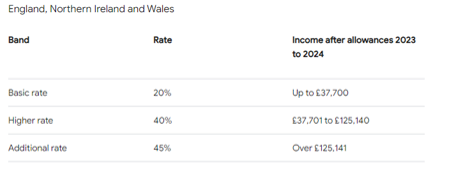
Example of how this additional income may affect the tax rate you sit in:
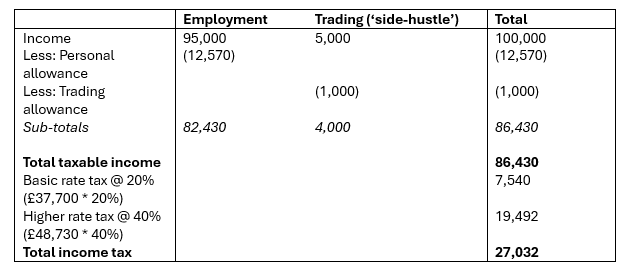
What if you exceed £1,000 income for the first time:
If you earn over £1,000 you should notify HMRC and register as self-employed, this means completing a self-assessment tax return.
Failure to register in good time will likely lead to a late filing penalty of at least £100, and any late payments will have accrued interest on top.
If you have any questions around what this means for you or if you need assistance registering for self-assessment and completing a return, our tax team is more than happy to help.






Leave A Comment